Varroa is the number-one killer of honey bee colonies, and it only loses to beekeepers who measure. Log a mite wash and ColonyTrack tracks the count over time, flags the moment you cross the treatment line, and reminds you before the next check is due. The numbers and the dates, not guesswork and no AI.
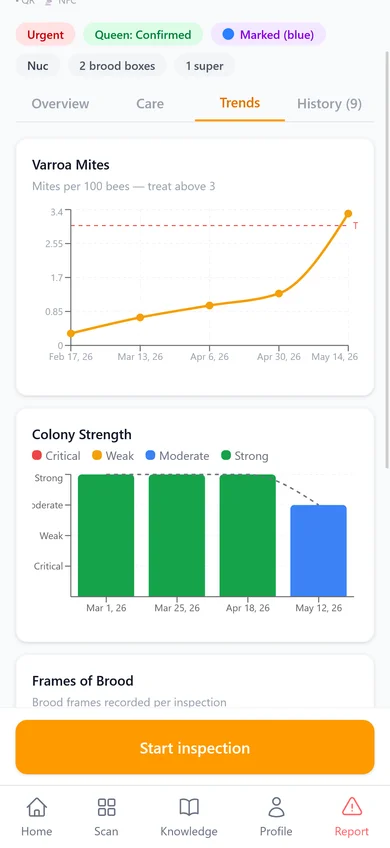
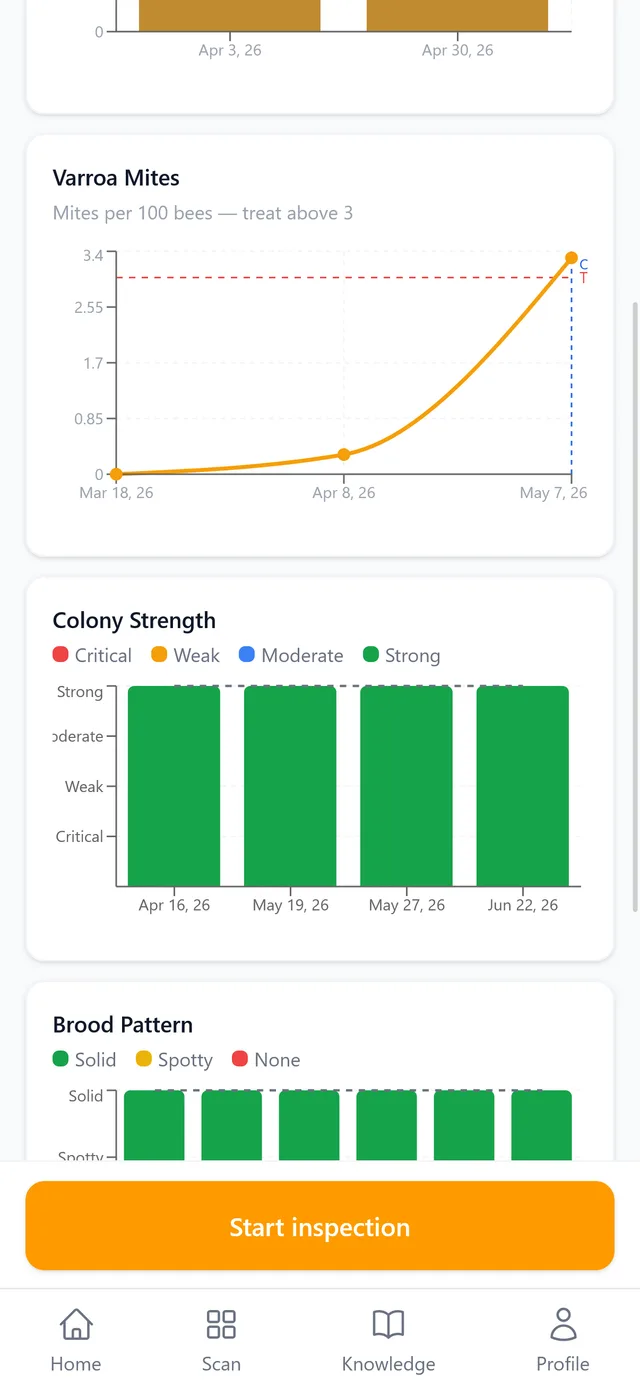
Get the AppA single mite count is a snapshot. What protects a colony is the trend: is the load climbing toward the treatment line, or did your last treatment actually knock it down? ColonyTrack keeps every wash on the hive's timeline, shows the count against the 3-per-100 threshold, and turns a hive red the moment it needs action.
Log what you counted. The app does the math, the trend, and the reminders.
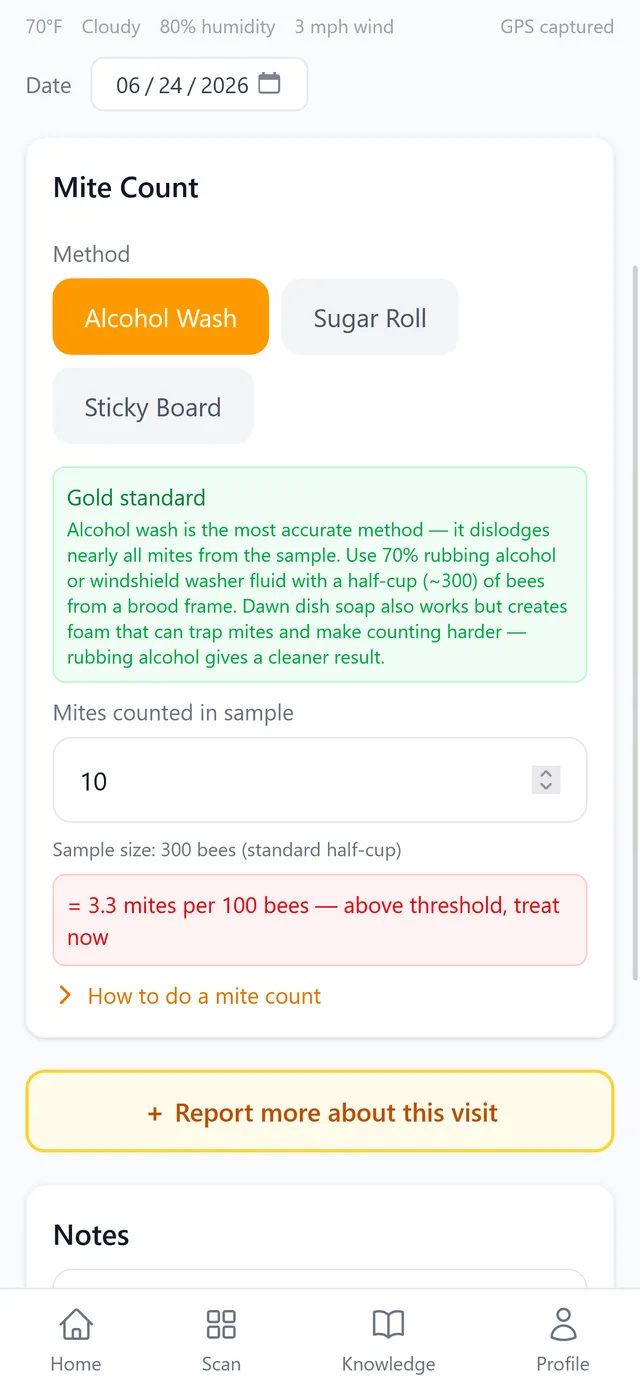
Enter the count and the method you used, alcohol wash, sugar roll, or sticky board. The app records mites per 100 bees and notes how accurate that method is.
Each count plots against the 3-per-100 treatment threshold. Below the line you watch the trend; at or above it, the hive flags red, treat now, before the mites do real damage.
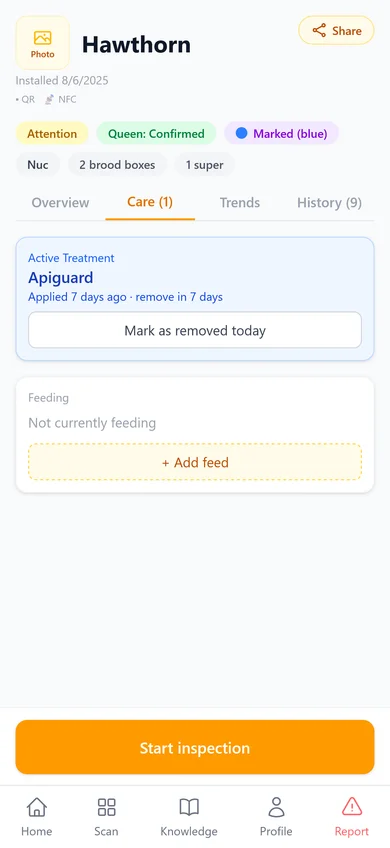
No count in a while? The app nudges you. Just treated? It tracks the treatment window and prompts a follow-up wash so you confirm the knockdown instead of assuming it worked.
Most beekeepers treat at around 3 mites per 100 bees (3%) during the active season, and many drop that lower heading into fall, when a rising mite load does the most damage to the winter bees a colony depends on to survive. ColonyTrack uses that 3-per-100 line as its treatment trigger, so a hive turns red exactly when the research says to act, not once it is already too late.
Varroa rarely kills a colony directly. It feeds on bees and spreads the viruses, deformed wing virus and others, that actually do the killing. That is why catching the climb early matters far more than any single reading: by the time a colony looks sick, the mites have usually been winning for months.
The method changes what the number means, so ColonyTrack records it and reminds you what it is worth.
Because the app knows which method you used, a low sugar-roll number does not quietly talk you out of a treatment you actually need.
Logging mite counts, the trend, and the at-a-glance treatment-line warning are free for every beekeeper. Upgrade to Pro and ColonyTrack adds the treatment-window intelligence: removal reminders while strips are in, the follow-up wash nudge after, and a push the moment a hive crosses the line, so varroa never gets a head start while you are busy.
The widely used treatment threshold is around 3 mites per 100 bees (3%) during the active season, and many beekeepers act sooner heading into late summer and fall, when a high mite load damages the winter bees a colony depends on. ColonyTrack flags a hive the moment it reaches that 3-per-100 line.
At least once a month through the active season, and more often from late summer into fall when mite populations peak. ColonyTrack reminds you when a hive has gone too long without a mite count.
An alcohol wash is the gold standard: it dislodges nearly all the mites from your sample. A sugar roll spares the bees but only recovers roughly 70 to 90 percent, so it undercounts. A sticky board shows natural mite drop and is useful for trends, but it is not a mites-per-100 count and is the least reliable for treatment decisions.
Yes. Log a treatment and the app tracks the removal window, reminds you (on Pro) when strips are due to come out, and prompts a follow-up mite wash afterward so you confirm the treatment actually worked instead of assuming it did.